
When an idea evolves into a passion supported by skills and extensive experience, it can often transform into a highly profitable business. This was the inspiration behind Brian Lee, the founder of Sokratech, a fintech enabler startup. Brian shared his dream of providing high-quality solutions made by local talent who deeply understand Southeast Asia’s dynamics. Here’s a closer look at his journey and vision.
A Depth of Experience in Fintech

With a background as a data scientist, Brian Lee was already well-versed in leveraging data to drive positive and impactful business results. After completing his master’s degree abroad, Brian was exposed to the fintech world, which showed a growing demand for data scientists. His love for the field deepened while working at Shopee in Singapore, where he was responsible for developing credit scoring systems. Following Shopee, Brian joined OVO as a Senior Data Scientist, further enhancing his expertise in fintech.
Brian’s international experience expanded when he joined GoCardless, a renowned UK-based unicorn and payment gateway company. There, he played a pivotal role in the early stages of developing a fraud prevention product.
Initially unfamiliar with the UK’s unique payment systems, Brian saw this as a valuable opportunity to learn and explore the nuances of payment options across Europe. Over the course of his two years in the UK, Brian gained significant exposure to fraud prevention technologies, learning about various players in Europe and the US.
“Working at GoCardless gave me the chance to see the global perspective of fraud prevention. The exposure to cutting-edge technology and diverse payment systems was invaluable,” Brian shared.
Launching Sokratech: A Local Solution to a Global Problem
According to the Sift report, there was a 3x increase in account takeover fraud in Q2 2023. In Indonesia, this includes social engineering, phishing scams targeting digital wallets, and fraudulent online loan offers. As the digital economy expands, these threats are expected to grow, placing immense pressure on financial institutions to strengthen their defenses.
Returning to Indonesia, Brian identified a gap in the fraud prevention market. While major Indonesian banks already utilized fraud detection systems, and still not able to solve the diverse fraud types business was facing in Southeast Asia. Recognizing a lack of Southeast Asian, especially Indonesian, and the fraud loss that companies are facing, Brian decided to launch Sokratech.
Feedback from banking and financial institutions revealed a common problem: the lengthy implementation times for fraud prevention systems, often taking 30 to 90 days. Fraud teams would identify threats and create solutions, but engineers were required for implementation, giving fraudsters time to find a smarter way to fraud.
“Then I thought about how we could support the process without having to go through engineers, that’s the first thing. So, the focus is on deployment. The anti-fraud team must be faster than the fraudsters because the patterns keep changing. That’s the initial hypothesis we want to solve,” as Brian pointed out.
According to Brian, not many companies in Indonesia are offering such services or products at the moment. Some are only focused on the KYC process and do not provide fraud prevention for transactions.
Regulatory Momentum and Strategic Partnerships
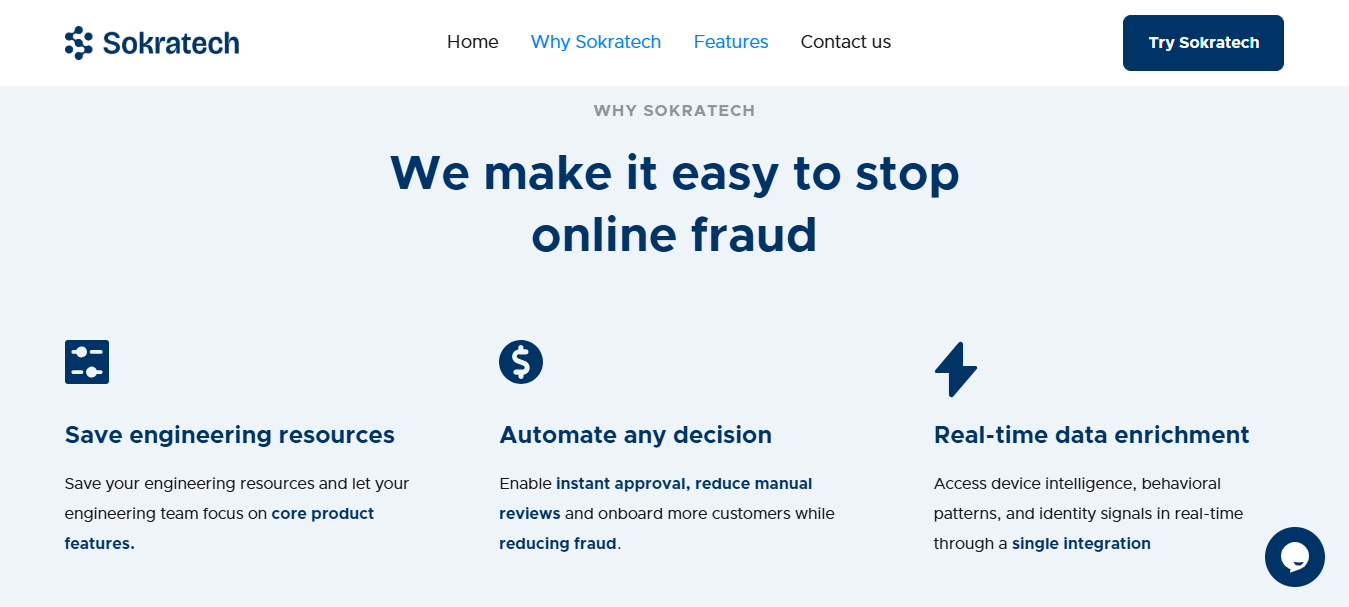
Sokratech’s launch aligns with Indonesia’s POJK 12/2024 regulation, which mandates all payment systems to have fraud prevention measures. While banks generally comply, platforms like Dana, OVO, and Gopay face challenges in implementing independent, high-quality systems. Sokratech aims to bridge this gap by offering a flexible solution, available both as SaaS and on-premise, to cater to diverse client needs.
“The new OJK regulations create both an opportunity and a challenge,” says Brian. “It’s a chance for us to showcase Sokratech’s capabilities while also addressing an urgent need in the market.”
Sokratech faces the dual challenge of building trust with established financial institutions and navigating a market where SaaS adoption is still developing. To build trust among financial institutions, Sokratech adopted a strategic approach by partnering with renowned system integrators (SIs) in Indonesia. This approach helps mitigate skepticism and positions Sokratech as a reliable service provider.
“Currently, we’re offering our clients a proof of concept and pilots to showcase our product, allowing them to try our product for free. Our main focus is delivering value to our clients,” Brian explained.
Sokratech’s vision is clear: to provide innovative, efficient, and accessible fraud prevention solutions to financial institutions. By addressing regulatory demands and fostering trust among early adopters, Sokratech is paving the way for a safer and more resilient fintech ecosystem in Indonesia.
Brian sums up the vision In a nutshell: “We’re here to make fraud prevention accessible and effective for everyone, from major banks to fintech startups. It’s about making a real impact in the industry.”
Early Funding from Iterative
Sokratech’s founding team includes Brian Lee, Andy Tanu Ciaputra, a former software engineer at Taralite, and another close friend who joined as an engineer. Aside from Brian, the rest of the team initially worked part-time but transitioned to full-time after Sokratech joined Iterative and secured $225,000 in pre-seed funding
“This funding has allowed us to focus on building a strong product and ensuring our early clients are happy,” Brian shares. The company is currently operating lean, with investments focused on salaries, marketing, and sales. With the right mix of passion, expertise, and strategic partnerships, Brian and his team are set to make a lasting impact on the industry.
Iterative is a renowned accelerator focused on supporting Southeast Asian startups. It provides funding, mentorship, and access to a vast network of investors and industry leaders. Sokratech’s participation in the Iterative S24 cohort not only provided financial backing but also invaluable insights into scaling a SaaS business in the region.
SaaS Challenges in Indonesia
Although Sokratech, as a B2B SaaS company, recognizes the negative sentiment surrounding the perception of SaaS companies in Indonesia, they are working to address this challenge.
According to Brian, while the low cost of labor presents some challenges for SaaS adoption in Indonesia, it also creates opportunities. As he explains, “While markets such as in the US have a more established SaaS ecosystem due to decades of investment, Indonesia’s market presents a unique opportunity for tailored solutions that address specific local needs.”
This disparity in salary ranges between Indonesia and Western countries remains a substantial barrier for SaaS companies aiming to establish themselves in the Indonesian market.
Another issue is that companies in Indonesia are more accustomed to purchasing services rather than software. Brian points out, “I think that businesses in Indonesia often prioritize solutions that align with their specific operational needs, which can sometimes lead to a preference for in-house development or service-based models over SaaS products.”
This reluctance to embrace SaaS solutions is compounded by a general preference for service-based models in Indonesia, where businesses are more comfortable with outsourced services than with purchasing software.
However, despite these challenges, the SaaS market in Indonesia is experiencing growth. According to a report by Ken Research, The Indonesian SaaS software market is projected to reach USD 0.55 billion, driven by the rapid adoption of cloud technologies and increasing investments. This growth is fueled by the expanding digital transformation initiatives in Indonesian businesses and an increasing recognition of the benefits of SaaS.
Additionally, a survey by Tech in Asia highlights that 64% of Indonesian startups have adopted cloud-based software, pointing to the growing trend of SaaS adoption in the country.
These developments suggest that while challenges remain, there is an increasing opportunity for SaaS companies in Indonesia. By understanding and addressing these market dynamics, companies like Sokratech can navigate these challenges and capitalize on the expanding market potential.







 Yenny Yusra Journal
Leave a comment