Indonesia, a nation blessed with massive and fertile lands, has long been synonymous with agriculture. Yet, despite its enormous potential, the sector remains one of the most challenging to modernize through technology. The primary obstacle? A lack of skilled talent with the passion and expertise to drive innovation in this space.
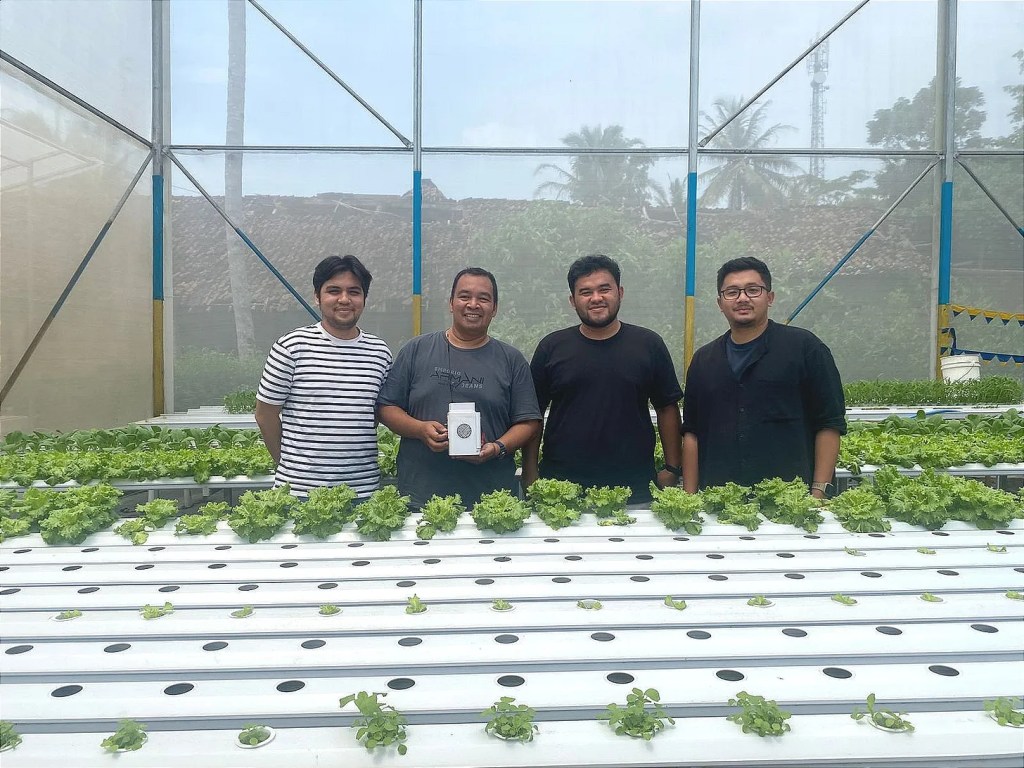
Meet Indera Agri, a startup co-founded by Bagoes Inderaja, an ITB and Wageningen University & Research graduate, along with Ferry Wijaya and Rae Gara. Ferry is an experienced software engineer specializing in digital solutions like AI/ML and IoT, while Gara brings deep expertise as an agronomist, working across multiple crops to develop science-driven products.
Backed by a talented and passionate team, Indera Agri is on a mission to revolutionize Indonesian farming with data-driven solutions, blending traditional agricultural wisdom with cutting-edge technology.
Bridging the Technology Gap in Agriculture
Indonesia’s agricultural sector still heavily relies on manual methods, with minimal integration of modern technology. This reliance has led to inefficiencies, crop losses, and missed growth opportunities. As Bagoes explains, “Farmers continue to struggle with unreliable harvests, persistently high mortality rates, and low productivity per season, making it difficult to achieve sustainable growth and profitability.”
A major challenge in Indonesian agriculture according to Bagoes is the lack of reliable data. “The pain point is always data,” Bagoes points out. “For example, if this month’s production is only 10 tons when it should be 12 tons, the usual response is guesswork, blaming rain, pests, or other factors without concrete data to confirm the causes.”
Another significant issue is mismanagement. “It’s chaotic,” says Bagoes. “This disorganization allows for inefficiencies. Traditional methods rely on material-based monitoring, but if we shift to environmental-based tracking, it becomes tamper-proof.”
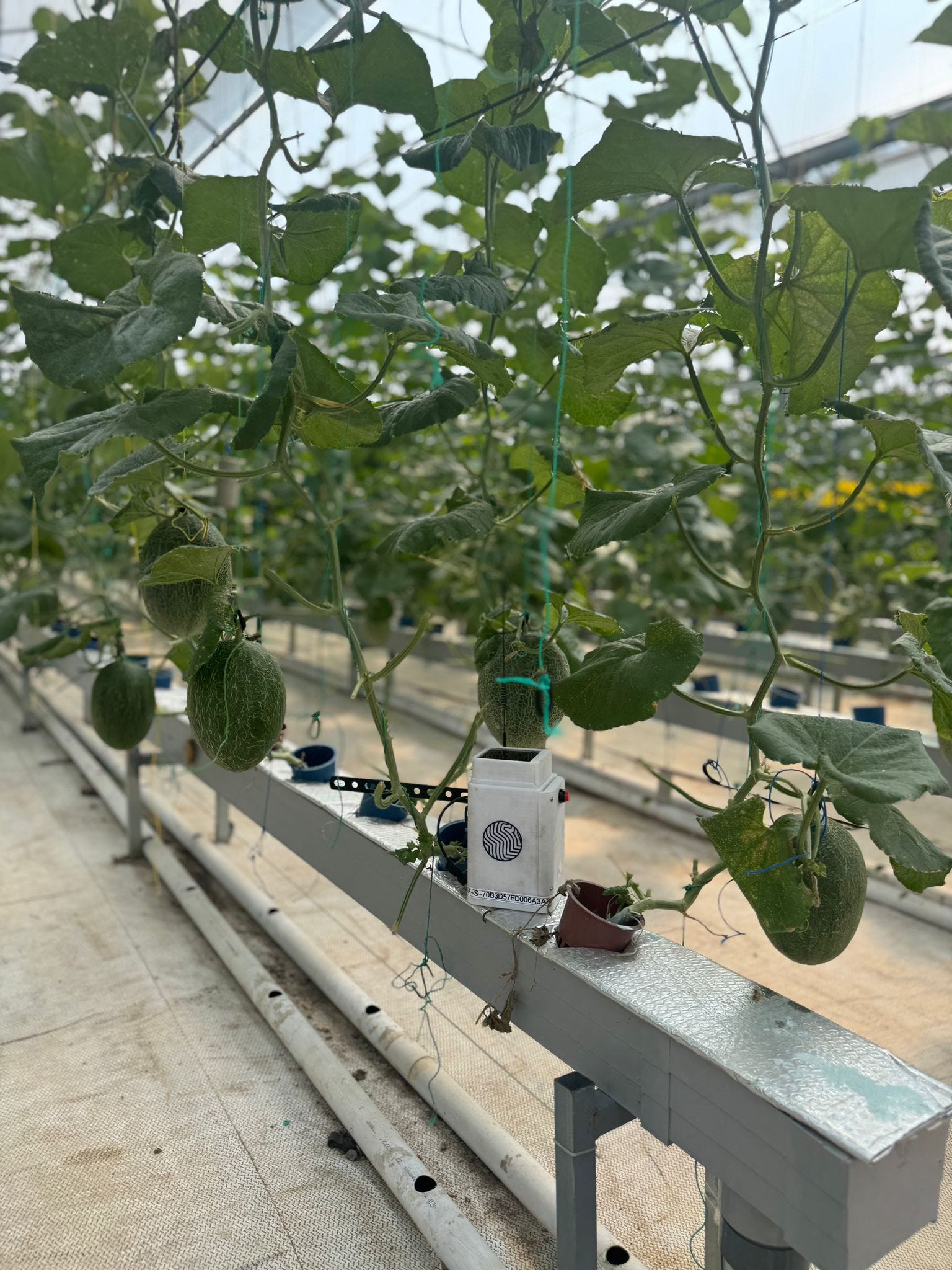
To address these challenges, Indera Agri is introducing three core principle:
- IoT Devices – Smart sensors that collect real-time data on microclimate, nutrient, and crop conditions.
- SaaS Platform – Additional feature: standardized workflow
- Consulting Services – Expert guidance to help farmers implement best practices and optimize their operations.
Greenhouse Farming to Boost Agricultural Productivity
Bagoes and the team have introduced an approach that utilizes greenhouse farming methods powered by technology. By maximizing the use of existing land, Indera Agri provides relevant, eco-friendly solutions through innovative greenhouse farming. Focusing on the upstream agricultural sector, Indera Agri targets farmers who want to maximize its potential. These farmers have two options for scaling their operations: expanding their land or increasing productivity on their existing land. However, without the right technology, their production capacity remains underutilized.
“The market is growing,” Bagoes notes. “And these farmers are willing to invest in technology to boost productivity. Many have already purchased technology from Israel or China, but the costs are overpriced, reaching billions after including taxes and customs charges.”
By optimizing upstream processes, Indera Agri positively impacts the entire agricultural value chain. Improved efficiency in early-stage farming leads to better-quality produce, higher employment rates in farm labor, and enhanced downstream processes like distribution and retail. “Eventually, we’ll get used to eating high-quality food, just like in the Netherlands,” Bagoes remarks.
Indera Agri’s IoT devices continuously monitor land conditions, including microclimate, nutrient levels, and crop conditions. The data is then analyzed on the SaaS platform, providing farmers with real-time recommendations. “The SaaS acts as a guide, streamlining farming workflows,” Bagoes explains.
Sustainability at the Core: The ESG Approach
Indera Agri is not just improving farming efficiency, it’s driving sustainability. By equipping farmers with precise data, the company helps reduce crop losses, enhance yields, and boost profitability. “We’re not just assisting them; we’re accelerating their growth,” Bagoes asserts. “Even if we’re not directly involved in their farming, we’re making things easier by collecting and analyzing data.”
The startup is deeply committed to environmental, social, and governance (ESG) principles. By optimizing resource use, Indera Agri minimizes agriculture’s environmental impact. “Fertilizer contributes to around 60% of agricultural greenhouse gas emissions,” Bagoes explains. “With data-driven management, we can significantly reduce unnecessary fertilizer and water usage.”
For instance, Indera Agri’s irrigation system carefully controls water distribution through drip irrigation, ensuring that plants receive precisely what they need—no more, no less. “In greenhouse systems, especially in fertigation-based farming, water isn’t just sprayed; it’s measured and delivered via controlled drip systems,” says Bagoes.
Moving forward, the startup aims to integrate AI into the platform, enabling predictive analytics for yield, disease outbreaks, and cost fluctuations. “AI cannot be one-size-fits-all,” Bagoes emphasizes. “Each client’s farm is unique. Even neighboring farms have different conditions.”
A Team of Agriculture and Tech Experts
Indera Agri’s success is driven by a small but highly skilled and complementary team. The team consists of three full-time members: Bagoes, who specializes in hardware and controlled agriculture; Ferry, who has expertise in software engineering and AI/ML; and Gara, who brings agronomic knowledge to the table.
Indera Agri is already seeing success. “We’re currently bootstrapping,” Bagoes shares. On the funding side, the company has secured a pre-seed investment from an angel investor. These funds are fueling the production of IoT devices and the development of its SaaS platform. Indera Agri also plans to form strategic partnerships with institutions and corporate venture capital (CVC) firms. “To encourage wider adoption, collaboration with large companies and CVCs is key,” says Bagoes.
Indera Agri now serves clients across Java, Sumatera, and Bali. The company sees significant potential in Bali, where demand for agricultural products is strong and focused entirely on the local market.
A Bold Vision for Indonesian Agriculture
Looking ahead, Indera Agri has ambitious plans. By 2025, the startup aims to expand beyond greenhouse farming into open-field agriculture and sectors like palm oil. “This year, we’re planning to expand and kick-start product development in the open field and other areas,” Bagoes shares. “Even without additional funding, I see billions in untapped market potential.
The company is also ramping up its AI development. “AI integration is planned by the end of the year,” Bagoes explains. “But first, we need to gather more data.” The AI will provide personalized recommendations tailored to each farm’s unique conditions, predicting yields, disease risks, and cost fluctuations.
Indera Agri envisions a future where Indonesian farmers fully embrace data-driven decision-making. “I want Indonesian farmers to step up,” he says. “We need a high-data culture, people talk about data but rarely use it effectively. First, we must make data visible, then, we must automate everything in agriculture.”
With its innovative approach and commitment to empowering farmers, Indera Agri is poised to revolutionize Indonesian agriculture, one data point at a time.
A Growing Market for B2B and B2C Opportunities
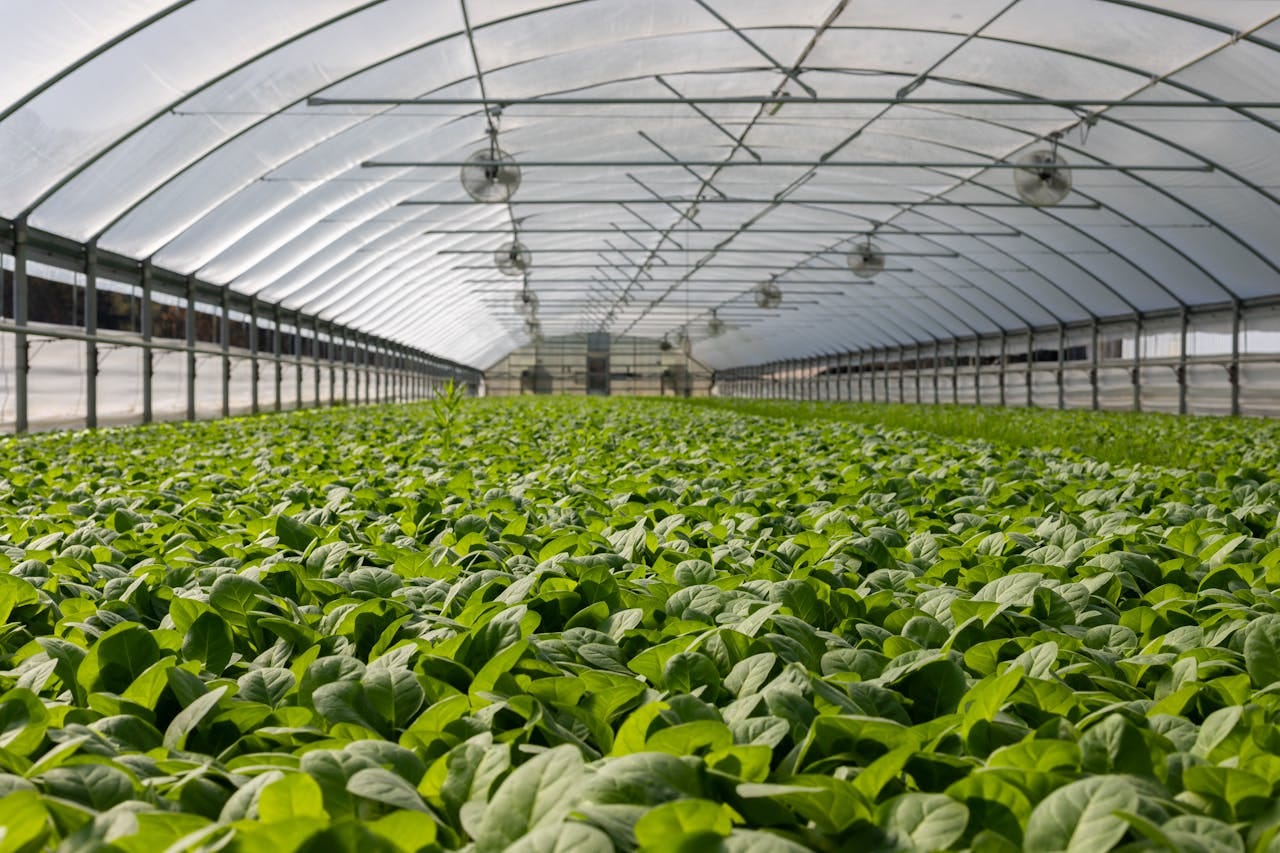
According to 6Wresearch, greenhouse farming in Indonesia is on the rise, thanks to increasing demand for fresh, organic, and high-quality produce. More consumers are prioritizing healthy eating, and businesses like restaurants, hotels, and retailers, are actively sourcing reliable suppliers. This shift is fueling growth in both B2B and B2C markets.
The industry is projected to grow at an impressive 12.8% CAGR from 2024 to 2030, driven by tech advancements in irrigation and climate control. Greenhouse farming ensures year-round production, making it a game-changer for food security and economic growth.
For B2B, greenhouse farms supply fresh produce directly to businesses, while in the B2C space, farmers are selling directly to consumers through markets and online platforms. The market for decorative plants and flowers is thriving, driven by strong demand from both local buyers and international exports.
Of course, challenges exist, like limited infrastructure in rural areas and a shortage of skilled labor, however, the benefits significantly overcome the challenges. With growing interest in sustainable farming and premium produce, greenhouse farming in Indonesia is set to thrive.





 Yenny Yusra Journal
Leave a comment