
After years in the startup world, Putri Nhirun decided to try something more traditional: a tea-based beverage business. Under the name Baliklagi Tea, she hopes to build a business that is not only sustainable but also profitable.
During our conversation, Putri Nhirun, Co-founder of Baliklagi Tea, explained how investors are increasingly shifting their focus toward retail businesses. She also referenced Grab’s 2023 report, which revealed that iced tea was among the top three most ordered items, reinforcing her decision to launch Baliklagi Tea in Jakarta. Since then, the business has secured initial funding from an angel investor.
From Ideation to Execution
Baliklagi Tea started from a casual conversation between Putri and her cousin, both tea lovers. Although Putri herself prefers coffee, she saw a great opportunity in the tea business. She realized that tech businesses require a longer time to generate revenue, whereas the beverage business offers quicker cash flow.
“I thought, why not try a traditional business first, one that can generate revenue from the start?” she said.
After considering various options, including export-import and coffee businesses, Putri and her cousin chose tea. Delivery Trends Report 2023 from Grab further reinforced their decision. In 2023, ice tea ranked as the third most-ordered beverage, while coffee was further down the list. This showed that tea has a strong market in Indonesia.
Within just two months of the initial idea which was June 2024, Baliklagi Tea was officially launched. The concept was simple: a low-capex contemporary drink model sold in office canteens.
Traditionally, tea has been the beverage of choice in Indonesia. However, recent years have seen a significant rise in coffee consumption, driven by a rapidly growing café culture and changing preferences among the younger generation. Domestic coffee consumption has nearly quadrupled since 1990, reaching approximately 4.8 million 60-kilogram bags in the 2019/2020 period according to Statista.
This surge is attributed to stable economic growth and a growing market for various roasted coffees and ready-to-drink beverages, as reported by Daily Coffee News. Despite this coffee boom, tea remains a staple in Indonesian households, reflecting a diverse and evolving beverage culture.
Refining for Sustainability

Regarding recipes, Putri initially worked with a food consultant. However, after receiving various customer feedback, she made numerous adjustments herself. The menu now is a refined version based on customer preferences.
“We’ve received low ratings once or twice, and this inspired us to improve the recipes. But we learned from those experiences and continuously enhanced the taste,” she said.
Apart from leveraging platforms like GoFood for online sales, Baliklagi Tea also operates physical outlets. However, the challenges were significant, especially competing with coffee stalls that had already established themselves. Some locations proved to be highly profitable due to company policies limiting competition, but others were less successful.
Currently, Baliklagi Tea has decided to temporarily halt expansion and focus on profitability. Out of the seven outlets that were opened, only four remain. Some outlets were struggling, while others helped subsidize them.
In addition to office canteens, Baliklagi Tea has started experimenting with other business models, including a mobile cart operated by partners. Payments are processed via GoBiz to ensure a cashless and efficient transaction system.
Running a Business with a Startup Approach
Although Baliklagi Tea is a beverage business, Putri applies a startup mindset in its operations. She has learned a lot about managing employees, from determining salaries to handling turnover. Everything is done through learning by doing. She also relies on data-driven decision-making, a habit carried over from her startup background.
Currently, Baliklagi Tea has secured an angel investor to support business growth. Putri admitted that she initially wanted to make this a VC-backed company, but based on current circumstances, she chose to run it conventionally first.
“I don’t want to rush into venture capital. There are too many demands to fulfill in that path, whereas right now, I just want to run this business as it is.”
Over time, Baliklagi Tea currently generates solid revenue from its existing outlets. Going forward, they aim to enter the packaged beverage market by distributing their products to retail stores like Indomaret and Alfamart.
The Future of Baliklagi Tea
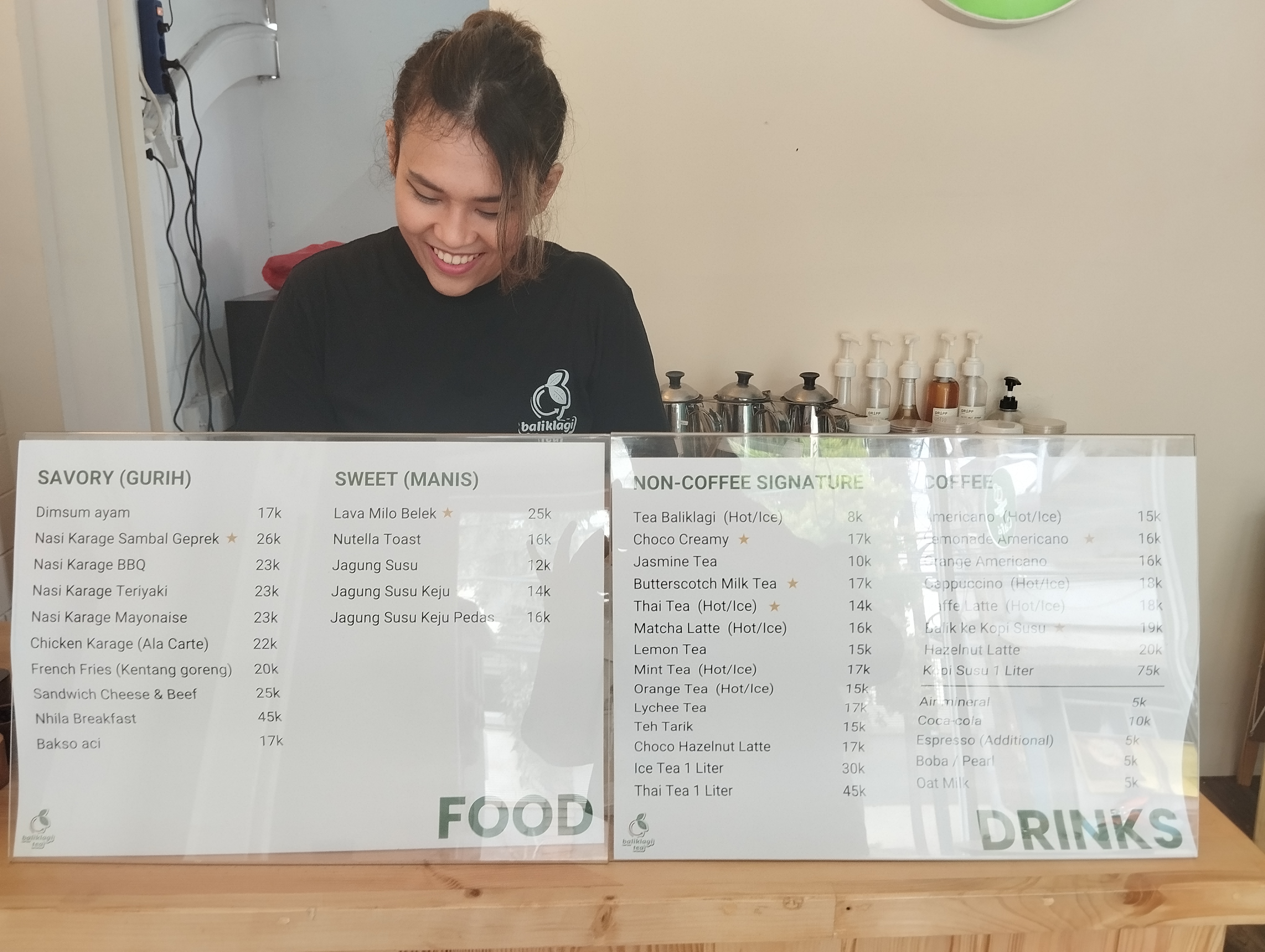
At the moment, the Baliklagi Tea team consists of seven people, with four outlets, two mobile carts and one franchise already in operation. Their primary focus is achieving profitability without further financial losses.
“My goal isn’t just to make this business profitable, but to truly live my lifestyle with this income,” said Putri.
With a well-thought-out strategy and a strong focus on quality, Baliklagi Tea hopes to continue growing and become the top choice for tea lovers in Indonesia. As the name suggests, they want customers to keep coming back for more.
Shifting Investment Trends: From Tech Startups to Traditional Businesses
Indonesia’s startup ecosystem has been dynamic, contributing significantly to the nation’s economic growth. According to Statista In 2023, the country ranked second in Southeast Asia’s startup ecosystem, highlighting its prominence in the region.
However, recent data indicates a slowdown in startup investments. Investments dropped by approximately 67%, from US$1.43 billion during January–November 2023 to US$479 million in the same period of 2024 according to Katadata. This decline suggests a potential shift in investor focus, possibly moving away from tech-centric startups towards more traditional and retail-oriented businesses.
These trends provide valuable context for understanding the current landscape of Indonesia’s beverage industry and startup ecosystem. The evolving preferences in beverage consumption and the changing dynamics of startup investments reflect broader socio-economic shifts within the country. With the right approach, Baliklagi Tea has the potential to thrive in this evolving market.






 Yenny Yusra Journal
Leave a comment