
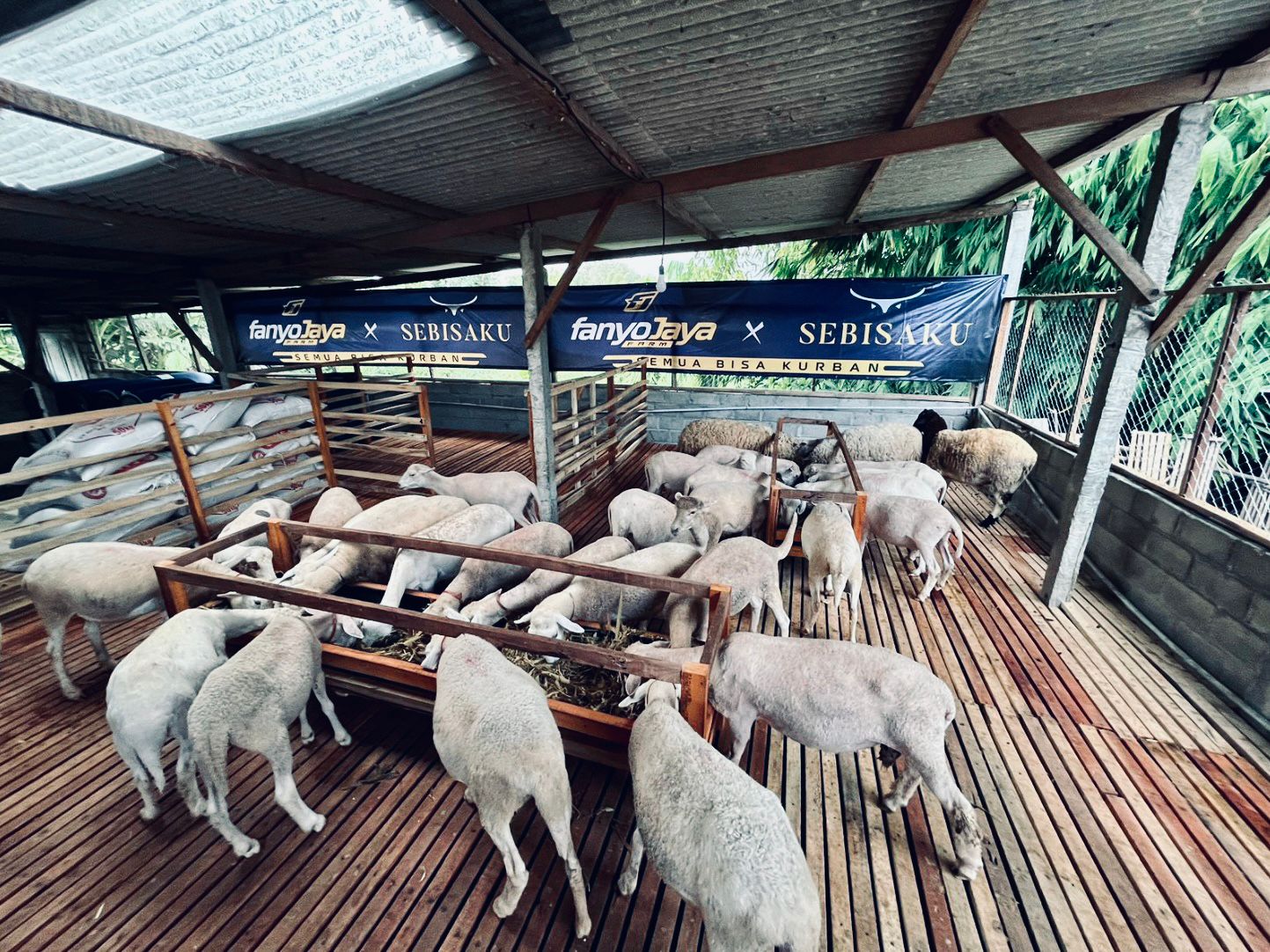
In Indonesia, most agritech startups today focus on aquaculture. There are far fewer that support livestock farming, especially goats, sheep, and cows. This gap presents a unique opportunity, especially during Eid al-Adha, when demand for sacrificial animals surges. That’s where Sebisaku comes in: a startup that helps connect buyers and farmers through a simple idea, saving daily to afford a kurban animal, with a focus on serving the lower-middle class.
The Surprisingly Low Number of Kurban Participants
Based on a 2021 study by the Institute for Demographic and Poverty Studies (IDEAS), only around 2 million Indonesians participated in kurban. That’s just 1% of the roughly 200 million Muslims in the country.
“It’s shocking,” said Roy Salat, Co-Founder of Sebisaku. “We’re one of the largest Muslim-majority country in the world, but only 1% of our Muslim population is performing kurban.”
Even with this small participation, the economic impact is massive, around 24 trillion rupiah generated annually. “That means most of the people who do participate are wealthier individuals who buy livestock in large quantities,” Roy explained. “But what if more people could take part?”
Roy started looking into the reasons behind the low numbers. He found two main barriers: people don’t plan ahead, and livestock prices spike closer to Eid. “Most people don’t save for kurban. When the time comes, they can’t afford it,” he said.
To understand the issue better, Roy spent two weeks interviewing online drivers and office workers about their spending habits. He asked if they’d be willing to save a small amount daily toward buying a kurban animal.
“Most of them had never done kurban because they weren’t financially prepared,” he said. “But when I asked if they’d save daily, many of them said yes.”
Roy noticed a similar practice in villages: people saved around 100,000 rupiah each month for kurban, though prices were usually only announced close to Eid. “I wanted to improve on that system,” he said.
Roy owns a small goat farm, so he understands the market dynamics. “A goat that costs two million rupiah off-season can reach 3.5 million during Eid,” he explained. “At my farm, I set a fixed price upfront. I started with just 50 goats, gave customers a cheaper but fair price, and let them know exactly what they were working toward. If they couldn’t finish saving this year, they could continue next year, still at the original price.”
The idea behind Sebisaku was simple: give people a clear, upfront goal to save toward, and take the stress out of last-minute buying. That certainty was a game changer. “Farmers are happy when there’s a clear system,” Roy said. “I told them not to mark up prices too high, and in return, more buyers would come. They agreed.”
Tech for Trust, Access, and Scale
Sebisaku officially launched two years ago and now has over 12,000 users, more than 5,000 kurban transactions, and 12 farm partners. They offer a mobile app and website where users can save at their own pace, there’s no minimum daily amount.
Once a user’s balance meets the price of a goat, Sebisaku arranges delivery. And if users can’t finish saving in one year, they can continue the next year with the same goal and price. A new price applies only to new users.
Interestingly, 83% of people who complete their savings make the sacrifice in the name of deceased parents. “It’s emotional for many,” Roy shared. “They’ve never done kurban before, and now they finally can.”
The platform is especially empowering for the lower-middle class. “The problem isn’t that they can’t afford it, it’s that they don’t realize they can. When they start saving, they see it’s actually possible.”
Sebisaku’s revenue comes directly from the farms. Each farm partner gets access to a dashboard where they can track customer progress, offer discounts, and re-engage users. Farmers are vetted before joining to ensure trust and quality.
“This isn’t a loan or credit program,” Roy emphasized. “We’re not offering installments with interest. This is pure saving. And everything follows Islamic principles, from the type of goat to the time of sacrifice.”
Currently, Sebisaku serves Jabodetabek, Bandung, and Central Java. They’re planning to expand beyond Java, starting with canned kurban packages to reach more remote users. “Kurban isn’t just about money, it’s about the broader social impact,” Roy said. “The whole ecosystem benefits.”
Looking Ahead: More Users, New Features, and National Reach
Sebisaku remains bootstrapped with a small team, just four full-time members and a few part-timers. Growth has come largely through referrals and social media. Now they’re preparing to scale through partnerships with online Quran learning platforms and other digital services to reach more users.
“We’re working on launching new app features, adding suppliers outside of Java, and improving our user retention,” Roy said. “Our stickiness is above 10% already, but we want to push that higher.”
Farmers also benefit from having better access to buyers and insights via their dashboards. “What began as a way to increase kurban participation has become something much bigger,” Roy said. “We’re building an ecosystem that empowers small farmers, supports communities, and helps more Indonesians experience the joy of giving.”
Sebisaku’s mission is simple: make kurban accessible for everyone, one small saving at a time.






 Yenny Yusra Journal
Leave a comment