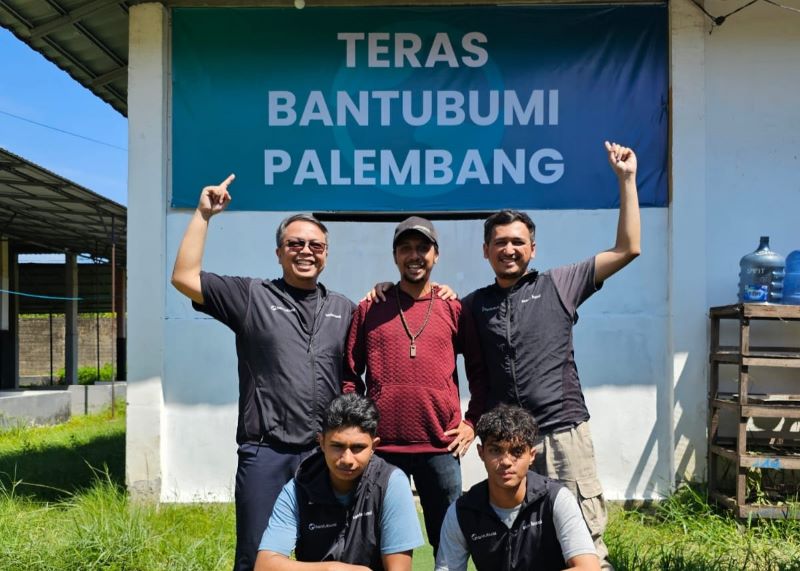
Recycling is still a tough industry to build, despite having strong business potential and lasting environmental impact. One entrepreneur who stepped into this space is Endra Marsudi, Founder and CEO of Bantubumi. His journey began with plastic waste recycling before he found a more promising future in collecting used cooking oil for recycling.
Entering the Recycling Business
Endra’s career path wasn’t closely connected to waste management. He first co-founded the travel photography startup Frame A Trip with actress Dian Sastrowardoyo, then worked in several startups to learn how companies grow. Later, he joined a firm that was experimenting with recycling plastic waste.
“I was the CMO there, setting up marketing. But after some discussions, I realized our visions were different. That’s when I thought, maybe I can build something on my own,” he said.
In 2021, Endra launched Bantubumi. At the time, investors were mostly focused on popular sectors like e-commerce and fintech. Green technology was not yet a hot area for funding, but Endra believed the potential was too important to ignore.
“I saw that PET plastic recycling could be big. But it wasn’t easy. You run into challenges with adoption, literacy, and resistance to new technology. Running this kind of business is not only about profit, but also about impact.”
The Challenges of Plastic Recycling
Bantubumi started as a PET plastic recycler, even building a plant with a full line of machines. But the reality of the market in Indonesia proved difficult.
“Recycling PET plastic is a red ocean. You compete with large companies for supply, often fighting over bottles from waste banks and small collectors. Margins are very thin,” Endra explained.
Bantubumi’s output was PET flakes, which were sold to downstream manufacturers for further processing, either molded directly into end-products such as brooms, or re-extruded into pellets that were then formed into plastic products, including recycled PET bottles. Consistently reaching higher-grade specifications required additional processing and cost, making it hard to compete.
Pivoting to Used Cooking Oil

By Mid 2024, Bantubumi pivoted to used cooking oil collection for recycling. The shift came after years of tough competition and shrinking margins in plastics.
“The main reason we pivoted was the constant competition and very slim profits. With used cooking oil, the margins are healthier, and we don’t need to build a factory. Just by collecting, we already see good results,” Endra said.
Bantubumi built a grassroots model by partnering with local communities. Each group, called a Rumpun (Rumah Himpun), is led by one coordinator who organizes 30–50 households to collect their used oil. The oil is then sold to Bantubumi.
Today, the company manages 20 Rumpun in Jabodetabek and has recently expanded to Palembang, partnering with 10 waste banks in line with the city’s waste-bank empowerment program, supported by a grant from the British Embassy, PoliPoli and Pijar Foundation. As a result, Bantubumi now engages over 1,000 households across Jabodetabek and Palembang through its Rumpun network and partner waste banks.
Opportunities and Growth Plans
Used cooking oil can be turned into products like soap or candles, but the real demand lies in biofuel. In Indonesia, a 40% biodiesel blend is made from palm oil or used cooking oil. Globally, biodiesel use in transport and industry continues to rise, driving demand for used cooking oil, and, more recently, the growth of Sustainable Aviation Fuel (SAF) production is further boosting used cooking oil demand.
While the HORECA (hotel, restaurant, and catering/cafe) sector is already crowded with many players, household oil collection is still relatively untapped. Bantubumi is focusing there and keeping its approach simple, while also collecting from HORECA. Instead of building complex apps or hard-tech drop boxes, Bantubumi uses standardized QR-coded jerrycans at the household level and a lightweight web-app at the Rumpun level for tracking and data collection.
“The key is awareness and motivation. Collecting oil has to be easy, and the value must be worth the effort. That’s why we offer fixed-rate incentives or practical products such as branded cooking oil, and we provide free jerrycans, complete with QR codes for convenient storage and traceability.”
Bantubumi operates with a 10-person team, keeping operations lean and efficient. The company’s revenue model is fundamentally profitable, with unit economics that improve as scale increases, putting Bantubumi on a clear path to profitability, so raising venture capital is not an urgent priority. For now, the company prefers grants to support expansion and maintain its balance between business growth and environmental impact. But the company also welcomes prospective invites from mission-aligned venture capital.
“Collecting used cooking oil for recycling is more than just business. It’s about creating impact, empowering communities, and helping the environment at the same time,” Endra said.
Indonesia’s Biofuels Boom in Context
IndexBox reported that In 2024, Indonesia consumed about 8.1 million tons, while global use reached around 46 million tons, worth nearly 65 billion US dollars. The government is also pushing higher mixing standards. According to Reuters, right now Indonesia runs on B40 (40 percent biodiesel blend) and plans to move to B50 by 2026. That increase could lift annual demand to almost 19 million kiloliters.
Sustainable Aviation Fuel (SAF) is also starting to grow fast. Production doubled in 2024 to about 1 million tonnes, and IATA expects it to reach 2 million in 2025. As biodiesel and SAF expand, the need for used cooking oil is also rising.
Indonesia is already a big biodiesel user and tested its first SAF flight in 2023. According to the report, starting in 2027, SAF will be required, which means more palm oil will go into fuel and exports will fall. Used cooking oil then becomes more valuable since it can be turned into fuel for trucks, factories, and planes.
That’s why Bantubumi’s move into used cooking oil comes at the right time. For Bantubumi, this is a market that’s both growing and reliable.





 Yenny Yusra Journal
Leave a comment