
Aditya Yohan Budisusetija, Founder & CEO of Robinson, doesn’t come from a culinary background but from engineering and the corporate world. Yet his entrepreneurial journey started much earlier. Back in college, he was already selling boxed rice meals to friends.
“My biggest passion has always been being a merchant,” he says. That small hustle grew into a bigger curiosity about the food business. Later, while working with FMCG and F&B clients, he saw the industry from a different angle and realized the opportunity was real. That’s when passion and business sense met, and Robinson was born.
Exploring Opportunities in Restaurant and Catering Business
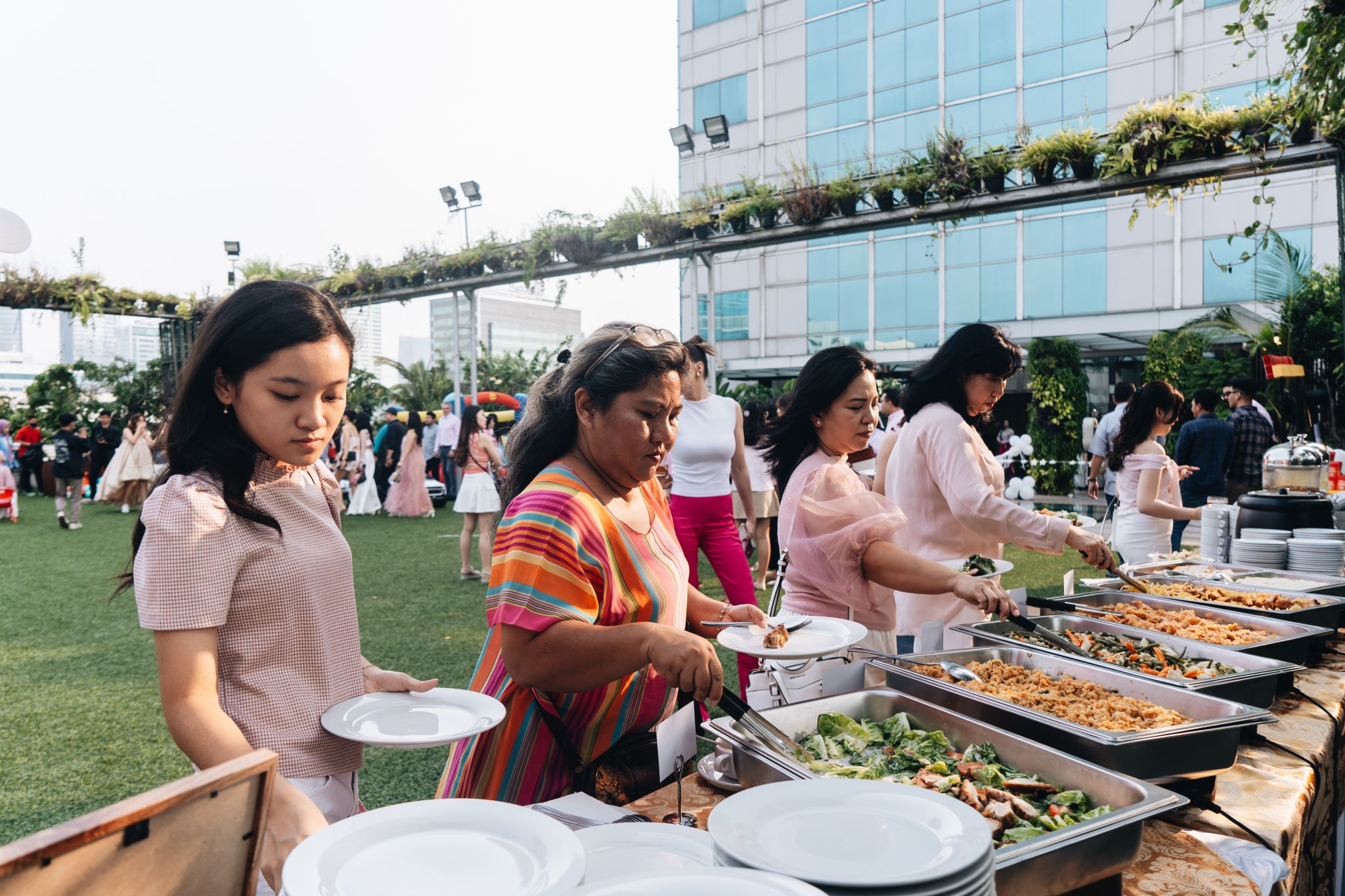
Robinson first opened in July 2022 in Alam Sutera as a modern café, following the lifestyle trend at the time. At the beginning, Aditya built it with four partners. But after disputes and mismanagement, the partnership dissolved, and he decided to continue alone at the end of 2023.
“I realized lifestyle trends shift so quickly. What we thought was a strong concept turned out to be temporary in the market’s eyes,” Aditya explains.
That’s when he decided to pivot. Instead of chasing only retail, he started focusing on production. He wanted Robinson’s kitchen to generate a wide range of products and services. “It’s not like a ghost kitchen. The concept I apply is more about long-term planning,” he says.
Today, Robinson runs on two main pillars: a romantic dining restaurant for higher margins, and Robinson Catering for weddings, corporate events, and soon daily office meals. The formula is simple: restaurants drive profit through margin, while catering plays on volume.
Aditya admits that building in F&B isn’t easy. The timing was tough, as Robinson started during the post-covid recovery and through 2023’s unstable economy.
In catering, the challenge is even more direct: competing with established players who already have strong brand trust. “Basically, catering is a big market. The challenge is competing against big names and trust. One is a long game, the other is a short game,” he says.
For him, taste is important, but not the only factor. “It’s like cars. A luxury car and a standard car both take you from A to B. But with restaurants, you can feel the comfort and atmosphere right away,” he explains. That’s why Robinson focuses on offering a premium dining experience at an affordable price.
Growing Strong with Structure and the Right Partners
Despite his background in tech, Aditya decided to build a conventional business. “For me, tech should support, not become the main business. Technology works best as an accelerator, not as the core value,” he says.
Robinson also remains bootstrap. Aditya has no interest in VC funding. Instead, he believes private equity or family offices make more sense for his kind of business.
What Robinson needs are strategic partners who understand the ecosystem and can add value beyond just money. It could be a supply partner for chicken production, or someone who can help open new locations. “As long as we can maximize the ecosystem, we don’t need to burn too much capital,” he adds.
This way, Robinson grows with the right structure and long-term stability, instead of chasing speed that can burn out a food business too quickly.
Robinson applies the same style to its marketing too. For the restaurant, digital marketing is key. For catering, it’s more old school. “Relationships come first. We still do door-to-door,” Aditya says.
The approach has shown results. Robinson Dining & Venue now serves around 1,000 to 1,500 guests per month with a 40% retention rate. Robinson Catering, launched in June 2024, has already handled more than 30 events and posted 50% revenue growth within its first three months.
Future Plans
Aditya’s long-term vision is to make Robinson more than just a restaurant or catering business. He wants it to become a concept factory, an enabler in the F&B ecosystem that can also serve as a maklon-style production hub.
“I want Robinson to become a factory, an enabler. Exit options will always be possible, but only if they align with my vision and mission,” he says.
Currently, Robinson runs with a lean team of 16, where many team members handle more than one role. Aditya admits he’s looking for a new co-founder, someone bold enough to grow the business with him.
For him, F&B doesn’t need to be flashy to be sustainable. “Sustainability in F&B is about structure, not gimmicky trends,” he concludes.
The food and beverage industry is one of Indonesia’s strongest backbones. In early 2025, it grew by 6.04%, outpacing the national average according to ibai.or.id. It makes up about 40% of non-oil manufacturing GDP and employs millions through 1.7 million SMEs.
Robinson is part of this ecosystem, proof that with the right structure, a conventional F&B business can grow strong and last.




 Yenny Yusra Journal
Leave a comment