
BINAR is entering a new chapter.
BINAR’s vision has remained consistent since its founding: preparing Indonesia for the future of work. What has changed is what that future looks like. Founded in 2017 as a digital talent and education company, the Indonesian company is now putting artificial intelligence at the center of its business, moving beyond digital skills training toward a broader ambition: helping companies rethink how work gets done.
The technology may have changed, but BINAR’s long-term vision remains the same: preparing Indonesia for the future of work.
Rather than focusing simply on AI tools, BINAR is moving deeper into enterprise AI transformation, helping companies identify where AI can improve workflows, strengthen workforce capabilities, and ultimately create measurable business impact.
For Alamanda Shantika, Founder and CEO of BINAR, the shift is not simply about following the latest technology trend. It reflects how the needs of companies are changing.
“AI upskilling in companies has become a basic need because people have to adapt,” Alamanda said. “But upskilling is only one part of the transformation. Companies also need to rethink workflows, roles and business processes around what humans and AI can each do best.”
Returning to BINAR’s B2B Roots
BINAR originally focused primarily on the B2B market, while its early B2C initiatives were largely designed to expand access to digital education.
During the pandemic, however, BINAR expanded its direct-to-consumer offering as demand for online learning surged. After the pandemic, the market changed. The broader B2C edtech environment became more challenging, while the technology sector entered what Alamanda describes as a “tech winter.”
The experience led BINAR to reassess where it could build the most sustainable business. “We learned that a direct-to-consumer model was not the most sustainable path for BINAR,” Alamanda said.
The company subsequently returned its focus to enterprise customers. That does not mean BINAR has completely abandoned the consumer market. Instead, it increasingly works through partnerships.
One example is its partnership with Merry Riana Digital Learning, where BINAR provides the platform and curriculum while its partner serves the B2C market. The model allows BINAR to continue extending its educational reach without rebuilding a large consumer-facing operation.
From Three Businesses to One Transformation Proposition
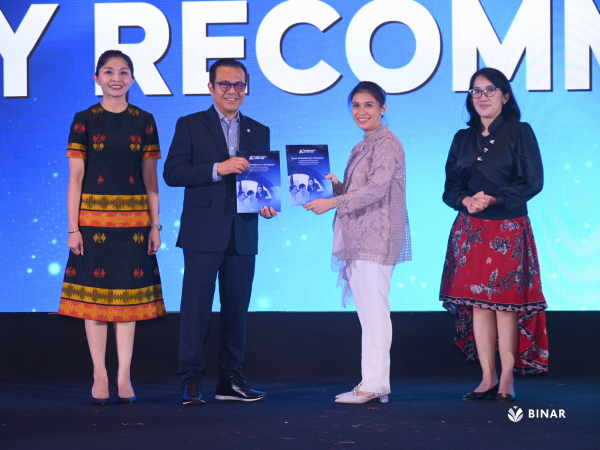
Today, BINAR operates across three main areas: workforce capability and upskilling, technology talent solutions, and technology and AI transformation.
Its training business helps organizations build new capabilities among their existing workforce, increasingly with a focus on AI literacy, automation and emerging AI-enabled roles.
Through its Tech Talent Solutions business, BINAR assesses, curates and matches technology professionals with companies based on technical requirements, project needs and organizational fit.
The company is also expanding deeper into AI and technology implementation, helping businesses identify operational problems, redesign workflows and deploy technology to address them.
Increasingly, BINAR sees these capabilities not as separate businesses, but as parts of one integrated proposition: helping companies transform how work gets done through a combination of people, technology and AI.
The company has also worked with Microsoft on AI adoption initiatives, including programs aimed at building AI capabilities across large segments of Indonesia’s workforce.
From Digital Transformation to AI Transformation
BINAR initially built much of its business around digital transformation, including digital skills, technology talent, mobile applications and web development.
Today, the focus is moving further into AI, particularly AI agents, automation and AI-enabled workflows.
Alamanda compares the current AI wave with the early adoption of computers. As computers became mainstream, workers had to learn basic productivity software such as Microsoft Word and Excel. She believes AI is now entering a similar phase.
“People have to learn,” she said. “They have no choice but to adapt.”
But the opportunity goes beyond teaching employees how to use ChatGPT or other AI applications.
For BINAR, AI transformation increasingly means redesigning work itself.
The company is seeing interest not only from technology companies and large banks, but from a much broader range of industries, including healthcare, beauty, food and beverage, and other traditional businesses looking to introduce AI into everyday operations.
AI Transformation Starts With the Workflow
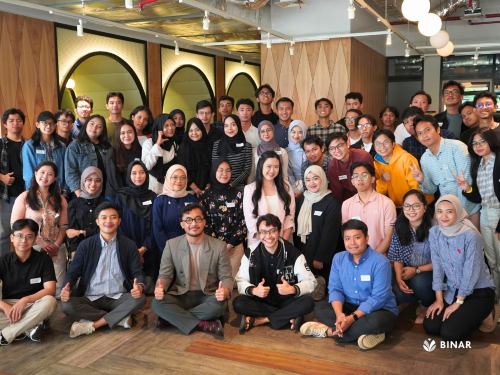
BINAR’s approach begins with understanding how a business actually operates.
Instead of starting with a particular AI tool, the company examines workflows and business processes to identify where technology can create measurable impact.
“It’s not just about assessing humans anymore,” Alamanda explained. “We need to look at the workflow and business process and see where an AI agent can actually increase revenue, gross profit margin or EBITDA.”
For BINAR, that distinction is important.
Companies can spend heavily on sophisticated software but still fail to generate meaningful returns if the technology is disconnected from their actual processes or if employees do not know how to integrate it into their work.
“Digital transformation starts with the business process,” Alamanda said. “We look at the business process first, then we see what technology can be attached to it.”
One area BINAR is currently working on is helping businesses move away from manual operations that are still heavily dependent on spreadsheets.
The company has developed its own technology platform that allows business applications, workflows and AI agents to be integrated into company operations.
Rather than developing every software project completely from scratch like a traditional software house, BINAR can use the platform as a reusable foundation and customize applications around the specific workflows of each client.
That approach could become an important part of BINAR’s next phase: combining consulting and implementation capability with reusable AI-native technology.
The goal of automation, Alamanda says, is not simply headcount reduction.
“The end goal is not to eliminate the human,” she said. “AI can take over more repetitive execution, while humans move toward judgment, context and decision-making.”
The Rise of the Forward Deployed Engineer
Another area BINAR is developing is the Forward Deployed Engineer, or FDE.
Unlike traditional software engineers who may primarily focus on coding, Forward Deployed Engineers work much closer to the business problem itself.
“They’re not just coding,” Alamanda explained. “They have to diagnose the problem end to end, figure out where AI can have an impact, build it and deploy it.”
BINAR has been developing its own curriculum around the role and applying the model internally for more than a year.
Rather than creating a mass-market course, the company currently uses the curriculum primarily to upskill existing technology and product professionals into more multidisciplinary roles.
The FDE reflects a broader shift BINAR expects to see in the AI economy
As software development becomes increasingly accelerated by AI, the scarce capability may shift away from simply writing code toward understanding business problems, redesigning workflows and deploying AI into real operating environments.
The concept is also gaining traction globally. Companies including Anthropic are building applied AI teams around similar roles, while new enterprise AI service models are emerging to help large companies implement AI more deeply into their operations.
Indonesia’s Next AI Challenge: From Awareness to Business Impact
AI awareness in Indonesia is growing quickly, but many organizations remain in the early stages of translating experimentation into measurable business impact.
“The awareness is still at the level of, ‘Okay, my team has to use AI,’” Alamanda said.
For BINAR, the next step is much larger.
Companies need to move from individual AI adoption toward redesigning workflows, automating repetitive activities, reorganizing responsibilities and determining which decisions should remain human-led.
That transition creates a sizeable implementation opportunity.
Many Indonesian corporates and mid-sized businesses are already experimenting with AI, but relatively few have deeply embedded the technology into their operating models.
BINAR wants to help companies bridge that gap, From simply using AI tools to redesigning how work gets done.
Building for the Human + AI Workforce
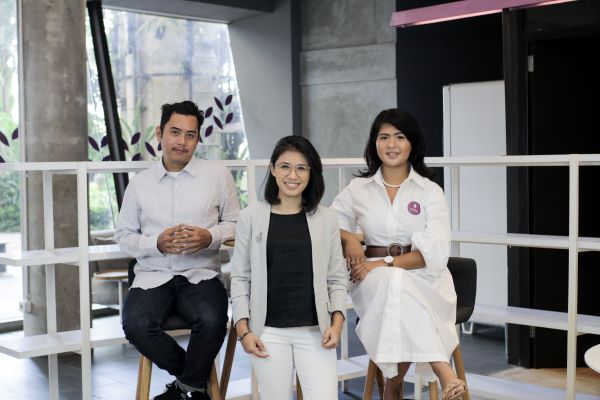
BINAR was founded by Alamanda Shantika, Dita Aisyah and Ignasius Seto Lareno.
Over the years, the three co-founders have gone through multiple phases of the company, from the early digital talent market, the pandemic-era edtech expansion, the technology downturn and now the rise of generative AI.
Like many long-standing founding teams, their perspectives do not always align immediately, Alamanda said, but the differences have also shaped how the company has evolved.
“We complement each other,” she said.
Today, that same vision preparing Indonesia for the future of work, is entering a new phase. As AI becomes part of the workforce itself, the question is no longer only what skills people need, but how companies should redesign work around humans and AI.
For BINAR, the answer is not simply to teach people how to use AI.
The company is betting that enterprises will increasingly need to redesign how work gets done, combining human capability, technology and AI agents in the same operating model.
And BINAR wants to build the workforce, technology and implementation layer behind that transition.
A Leaner BINAR Enters Its Next Growth Phase
BINAR is entering this new phase with a very different operating structure from the one it had during the peak of the technology funding cycle.
At one point, the company employed around 350 people internally. As the technology market changed, BINAR progressively reduced its internal organization, first to around 200, then 150, and today to approximately 35 people.
The result is a significantly leaner operating base and a greater emphasis on financial discipline and sustainable enterprise growth.
That shift also changed the way BINAR thinks about capital.
The company is currently pursuing fundraising, but the purpose is increasingly strategic: to accelerate R&D for its AI platform, strengthen its enterprise AI capabilities, pursue strategic partnerships and potentially explore M&A opportunities.
“We’re doing fundraising because there are many things we want to push, including R&D for our platform,” Alamanda said.
BINAR previously secured funding from investors including Teja Ventures and iGlobe Partners, as well as international investors including Jeremy Lin, Blue7, JN Capital & Growth Advisory, Scala Group, DGS, MD Capital and JLIN Capital Studio.
The company is now looking for strategic capital that can support its next stage of growth.







Leave a comment